A virtual copy of the patient's lungs, to ventilate with confidence.
VentTwin builds a patient-specific lung model from a CT scan and predicts how ventilator settings change oxygen and carbon dioxide in the blood.
Ventilation is still largely trial and error
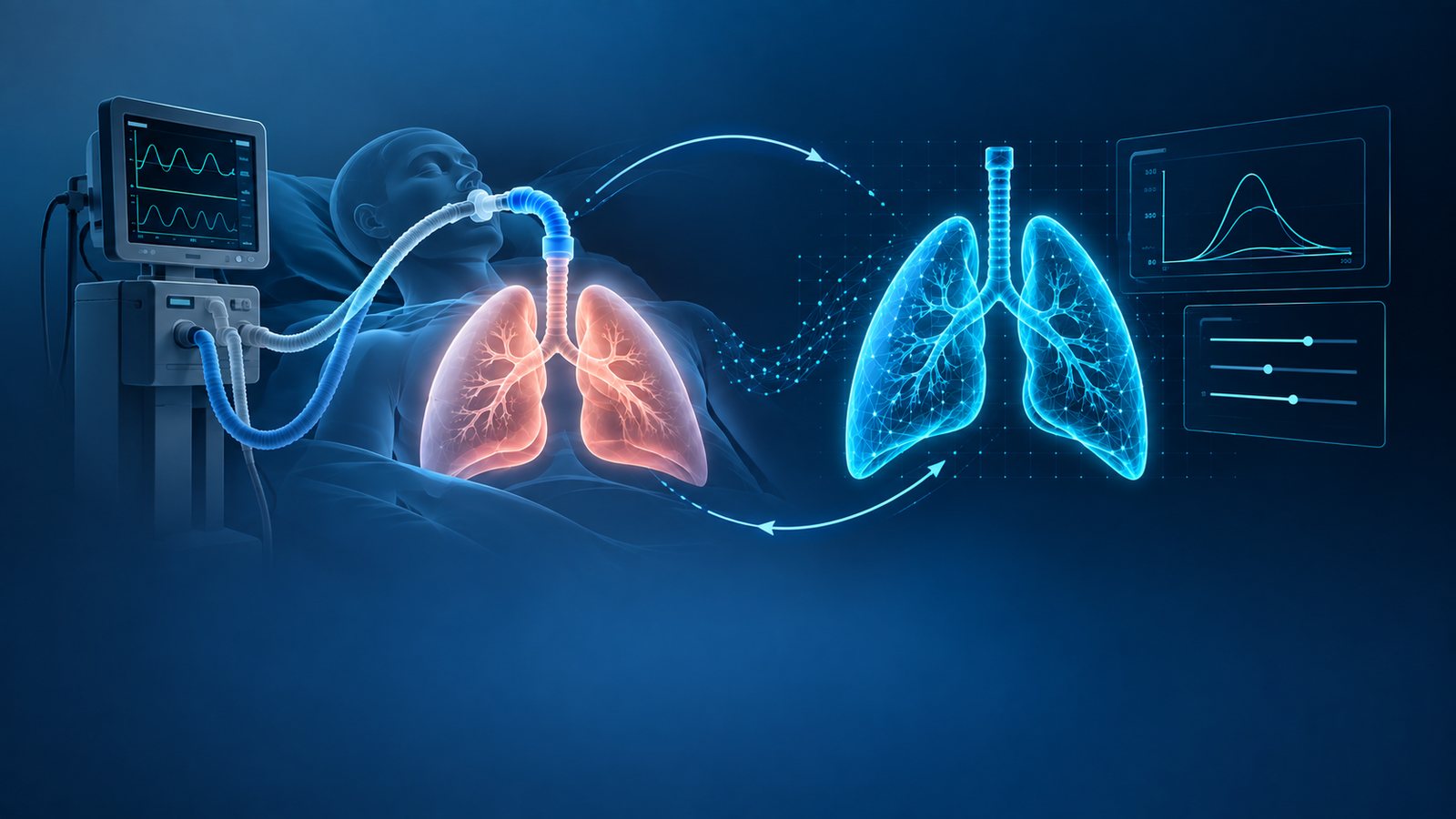
Intensive-care teams adjust a ventilator, wait to see what happens to the patient, and adjust again. Every round can add stress to injured lungs.
Change the settings
Pressures, breath rate and oxygen fraction are adjusted on the ventilator.
Reassess the patient
Doctors combine monitoring, blood gases and judgement to see what the change did.
Adjust and repeat
It is hard to know in advance how a particular patient will respond.
In ARDS, a severe lung injury, a large share of patients still die in hospital (about 35 to 46%, depending on severity; LUNG SAFE study, JAMA 2016).
From a chest CT to predicted blood gases
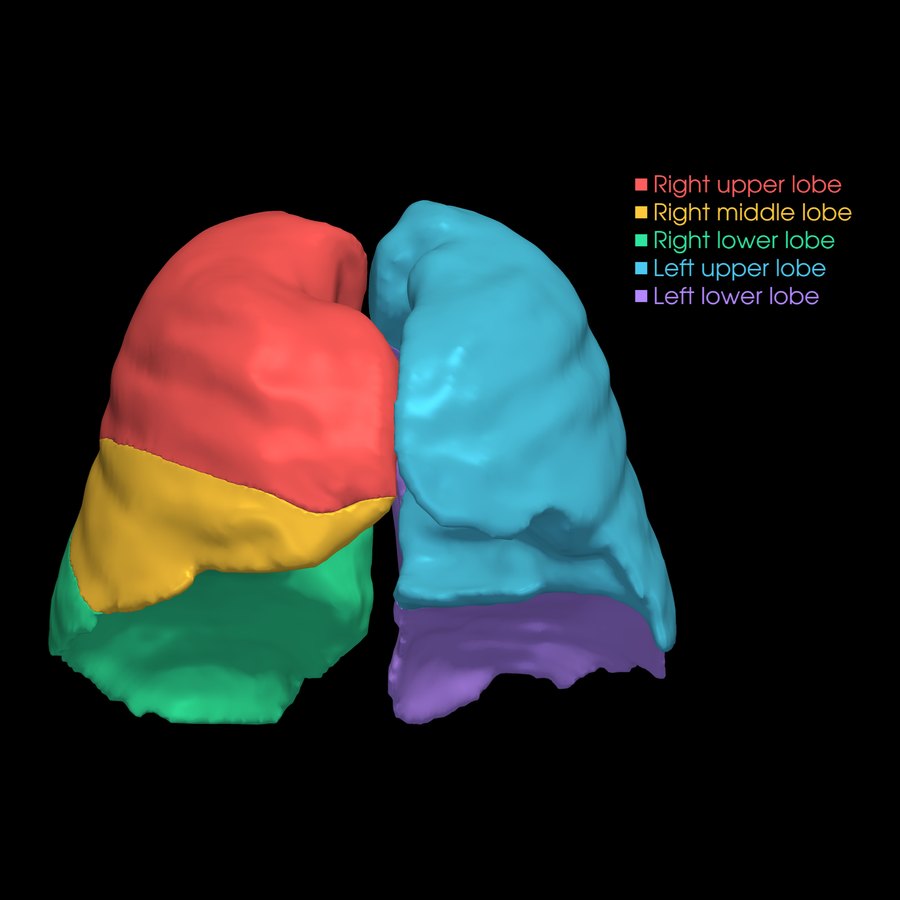
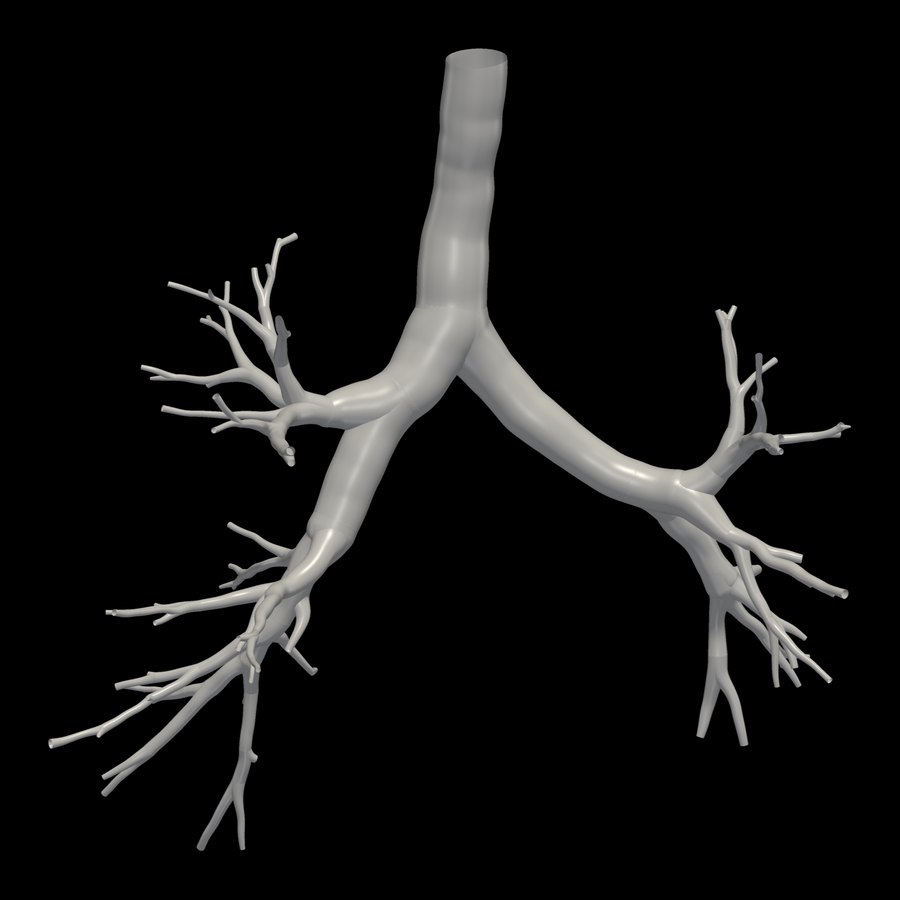
We rebuild the patient's own airways and lung lobes from imaging, then simulate how air flows and how oxygen and carbon dioxide move into the blood.
PaCO₂
SpO₂
pH
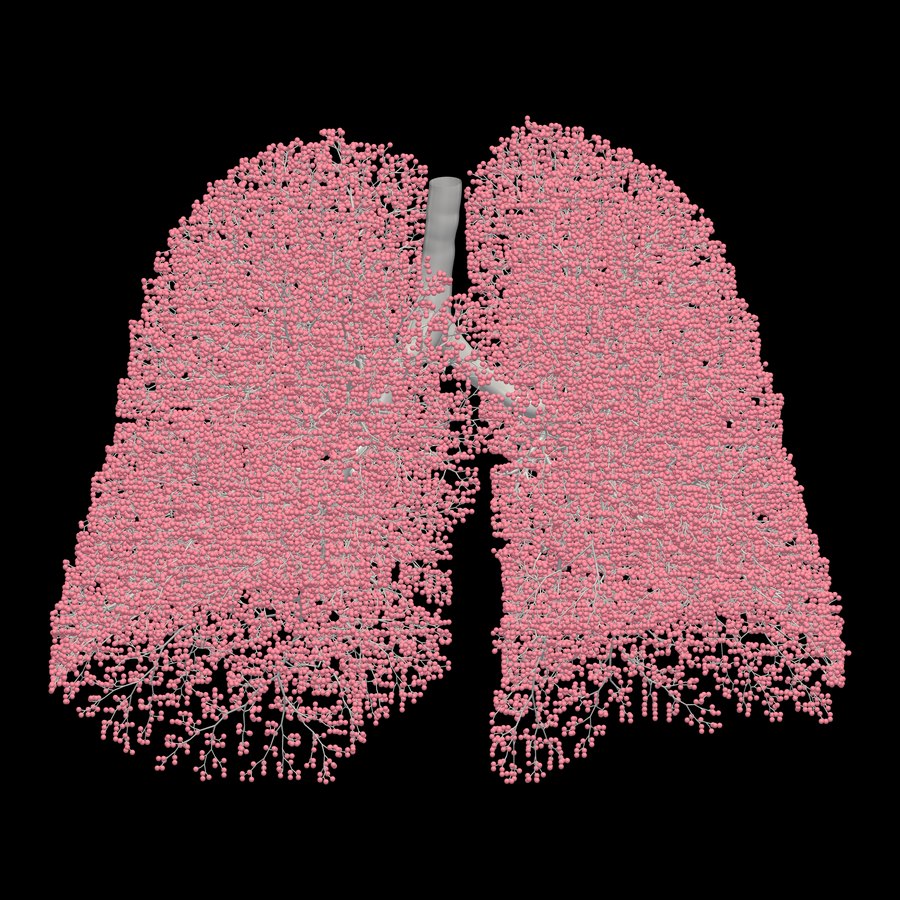
Images 1 to 3 are real outputs of the VentTwin prototype. The picture at the top of the page is an illustration. VentTwin is a research tool, not a medical device.
Physiology, not only mechanics
Many lung models describe how air moves. VentTwin also follows the gas into the blood, using the patient's own anatomy.
Forward model
Choose ventilator settings and see the predicted oxygen and carbon dioxide levels, tried on the virtual lung first.
Why gas exchange fails
The model separates blood that bypasses working tissue (shunt) from air that reaches tissue without blood (dead space).
Inverse design
Enter the target blood values and get candidate ventilator settings back. The doctor decides; the tool does not prescribe.
Honest about what is done and what is next
- Working model from CT scan to predicted blood gas values
- Healthy-lung results in the normal range
- Encouraging agreement on a published pneumonia case
- Validation on real patient data (more clinical data needed)
- Target values to settings, with machine learning
- A user-friendly software interface
- Retrospective evaluation with clinical partners
- Research-use evaluation in intensive-care units
- Regulatory pathway as a medical device

Seyyed Hossein Monsefi
I am a biomedical engineer with an M.Sc. from Politecnico di Milano and more than seven years of experience in fluid dynamics and mass transfer, from respiratory flow to physiological gas exchange. I built the VentTwin pipeline from CT processing to the gas-exchange model myself, and I am now looking for clinical, technical and business partners to take it further.
Who we would like to hear from
Intensive-care clinicians
Doctors who want to challenge the model on retrospective cases and tell us where it is wrong. Every wrong case teaches us something.
Hospitals and research groups
Academic and tertiary centres interested in retrospective validation and research-use evaluation, under the applicable ethics and data protection rules.
Specialists
CT image processing, software engineering and regulatory and quality expertise for medical-device software.
Business partners and supporters
People who can help turn a working prototype into a company, in Vienna.
Let's talk
If you work in intensive care, in medical technology or in digital health, I would be glad to hear from you.